Introduction
The automotive industry depends heavily on precision, durability, and cost-effective manufacturing. Whether you're producing engine components, transmission parts, brackets, or structural assemblies, choosing the right casting method can significantly impact product quality and profitability. This is why many manufacturers and shop owners actively search for reliable casting services that can meet their production goals while maintaining consistent quality standards.
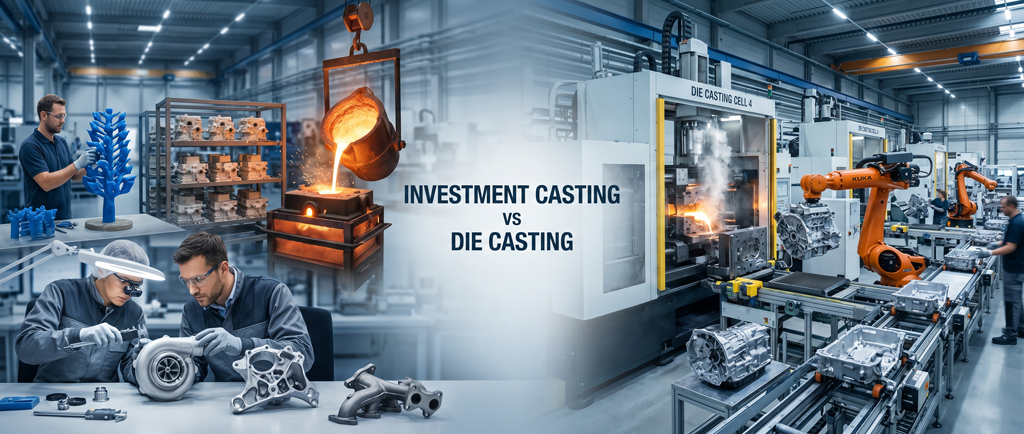
Understanding the differences between investment casting and die casting helps buyers make informed decisions based on their specific requirements. This article explores both processes, their advantages, limitations, and the situations where each performs best. Businesses seeking trusted manufacturing partners often evaluate suppliers offering specialized automotive casting services to ensure the best fit for their projects.
Understanding Investment Casting and Die Casting
Before comparing the two methods, it's important to understand how each process works.
What Is Investment Casting?
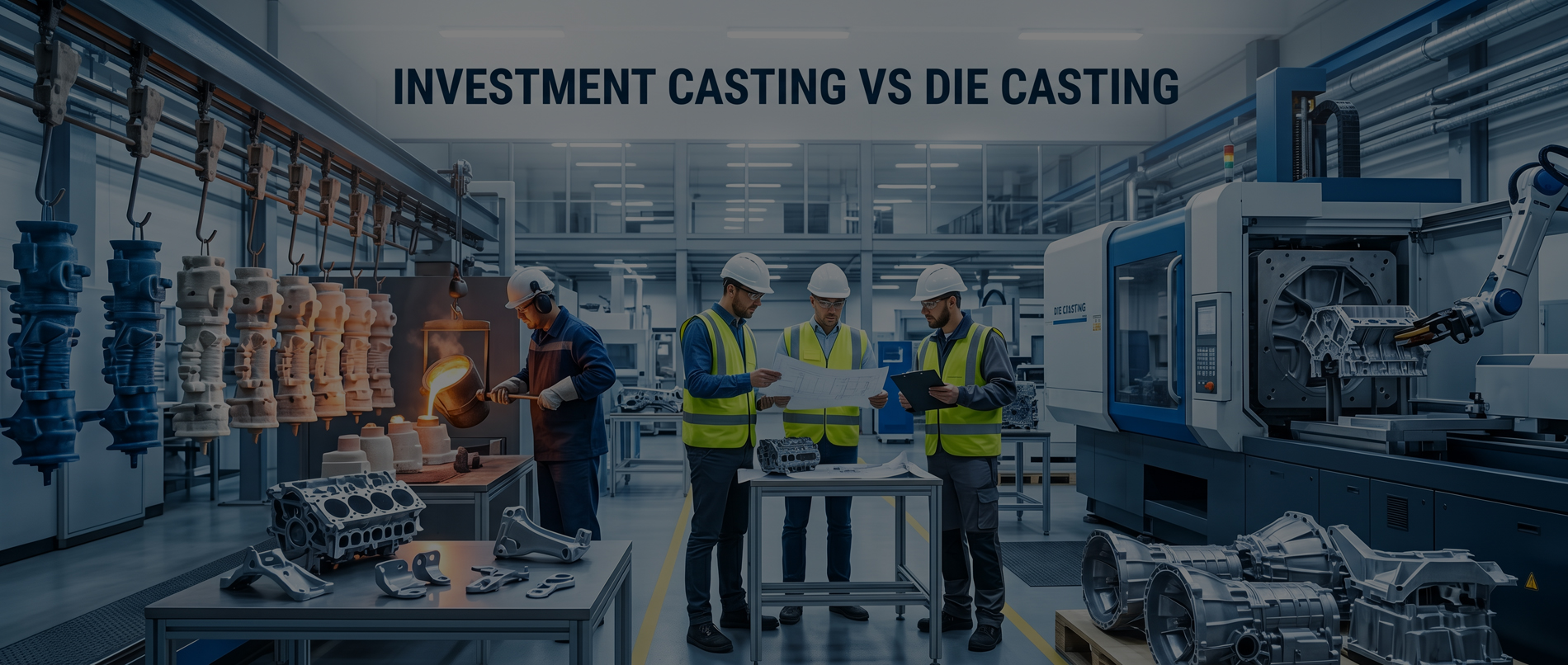
Investment casting, often referred to as the lost-wax process, involves creating a wax pattern that is coated with ceramic material. Once the ceramic shell hardens, the wax is melted away, leaving a mold cavity into which molten metal is poured.
This process is widely used for complex components that require excellent dimensional accuracy and superior surface finishes. Many manufacturers rely on investment casting for automotive parts because it allows intricate geometries that would be difficult or costly to machine.
What Is Die Casting?
Die casting involves forcing molten metal into a steel mold under high pressure. The mold, known as a die, can be reused thousands of times, making the process highly efficient for mass production.
Die casting is commonly used for aluminum and zinc components where large production volumes and fast cycle times are priorities. It is one of the most popular metal casting services in high-volume manufacturing environments.
Casting Services Comparison: Investment Casting vs Die Casting
Precision and Design Flexibility
When it comes to design complexity, investment casting typically has the advantage.
Investment casting can produce intricate shapes, thin walls, internal passages, and detailed features with minimal machining. This makes it ideal for specialized auto parts casting applications such as turbocharger components, exhaust system parts, and complex brackets.
Material Options
Investment casting supports a wider variety of metals, including:
- Stainless steel
- Carbon steel
- Alloy steel
- Brass
- Bronze
- Aluminum alloys
Die casting is generally limited to non-ferrous metals such as aluminum, zinc, and magnesium.
For manufacturers requiring specific material properties, investment casting often provides greater flexibility.
Surface Finish and Accuracy
Both methods provide excellent surface finishes compared to traditional sand casting.
However, investment casting often delivers superior detail and tighter tolerances, reducing the need for secondary machining operations. This can lead to significant savings when manufacturing precision automotive components.
Which Casting Method Is Better for Auto Parts Casting?
The answer depends on the application.
Choose Investment Casting When:
- Complex geometries are required.
- Tight tolerances are critical.
- Multiple alloy options are needed.
- Production volumes are moderate.
- Machining costs need to be minimized.
Many manufacturers seeking high-performance investment casting for automotive parts choose this process for engine, drivetrain, and exhaust system components.
Choose Die Casting When:
- Production volumes are very high.
- Aluminum or zinc alloys are preferred.
- Fast production cycles are important.
- Per-unit manufacturing costs must be minimized.
Die casting remains a leading solution for housings, covers, and structural automotive components produced in large quantities.
The Role of Automotive Casting Services in Modern Manufacturing
As vehicle designs continue to evolve, manufacturers increasingly require components that are lighter, stronger, and more precise. This demand has elevated the importance of specialized automotive casting services that can deliver both quality and scalability.
Experienced suppliers offering advanced metal casting services help manufacturers optimize designs, improve product performance, and reduce overall production costs. Companies with expertise in both traditional and modern casting technologies are often better positioned to support diverse automotive requirements. For example, industry manufacturers such as Shalimar Precision have contributed to the growing adoption of precision casting solutions across various industrial sectors.
Conclusion
There is no universal winner in the debate between investment casting and die casting. Each process offers unique advantages depending on design complexity, production volume, material selection, and budget considerations.
For intricate components requiring exceptional accuracy and material flexibility, investment casting is often the preferred choice. For large-scale production runs with lower per-unit costs, die casting remains highly effective. By understanding these differences and working with experienced providers of casting services , automotive manufacturers can select the most suitable solution for their specific applications.
Please get in touch with our team at rahul@shalimarexport.com or sales@shalimarexport.com and book a time slot using this link to discuss your outsourcing needs.
Schedule a meeting directly with our team at: https://calendly.com/rahul-shalimarexport/new-meeting?month=2025-12
We look forward to understanding your sourcing needs and exploring how Shalimar Precision can become your trusted long-term supply chain partner.